
A customer offers €900 for a transport. The loaded route looks straightforward, so the rate appears attractive. Then the dispatcher notices that the truck must travel empty to the collection point, may wait at delivery and will finish far from its next confirmed job.
The price is the same, but the job will cost more to carry out. To judge whether a road transport trip is likely to be profitable, a carrier must compare the revenue with the estimated cost of the full vehicle movement.
Price the journey the truck will actually make
Do not calculate only the loaded kilometres between collection and delivery. Start where the vehicle will really be available and follow it until it reaches its next useful position.
The estimate may need to cover the empty approach, loaded route, planned stops, likely waiting, unloading and any repositioning after delivery. It should also reflect the assigned vehicle, the driver’s availability and the next confirmed commitment.
A trip that looks profitable in isolation may not fit the operation. If the vehicle cannot meet the loading window or the job puts tomorrow’s confirmed work at risk, the rate alone cannot make it a good plan.
Define what your cost estimate includes
A useful cost model separates the main assumptions clearly. Fuel and tolls are obvious, but a carrier may also include driver and time costs, vehicle costs and an allocation for overheads. The exact model depends on the company.
Use the same scope each time. If waiting is already included in a time-based allowance, do not add it again. If empty positioning is already part of the estimated route, do not count it twice. The aim is a consistent estimate, not a larger-looking cost total.
Compare prices and costs on the same VAT basis. The figures in the example below exclude VAT.
A short worked example
Model example. The amounts are illustrative, not market rates. A carrier expects revenue of €900 for a trip. Its first estimate includes:
- estimated fuel and tolls: €360;
- estimated driver and time cost: €220;
- allocated vehicle and overhead cost: €140.
The estimated full cost is therefore €720. Subtracting that from the €900 revenue gives an estimated result of €180.
That €180 is not confirmed net profit. It is the result produced by this company’s chosen cost model before any costs or taxes left outside the calculation.
Now assume that two extra hours of waiting add €60 under the company’s own costing method. Repositioning after delivery adds another €70. These are additional costs that were absent from the first estimate; they are not already included in a per-kilometre figure.
The revised estimated cost becomes €850, leaving an estimated result of €50. The quoted rate still looks the same, but the trip now has far less room for another delay or unexpected cost.
Check feasibility before trusting the result
Good arithmetic cannot make an impossible trip workable. Before accepting the job, the dispatcher still checks the vehicle combination, available space and weight, required equipment, driver availability and existing commitments.
The assumptions also need sensible timings. A planned unloading time does not prove that the vehicle will be free at that exact moment. If the trip depends on immediate unloading or a tight repositioning window, that risk should be visible in the decision.
Return-work options may influence where the vehicle finishes, but they should be assessed separately rather than treated as guaranteed revenue. Our article on when a return load is worth taking explains that decision in more detail.
Where Moveniq helps with the estimate
The Moveniq Quote Calculator lets a dispatcher build a transport quote from the route, estimated fuel and tolls, other costs and either a target margin or proposed final price. The dispatcher chooses the costs and assumptions to include.
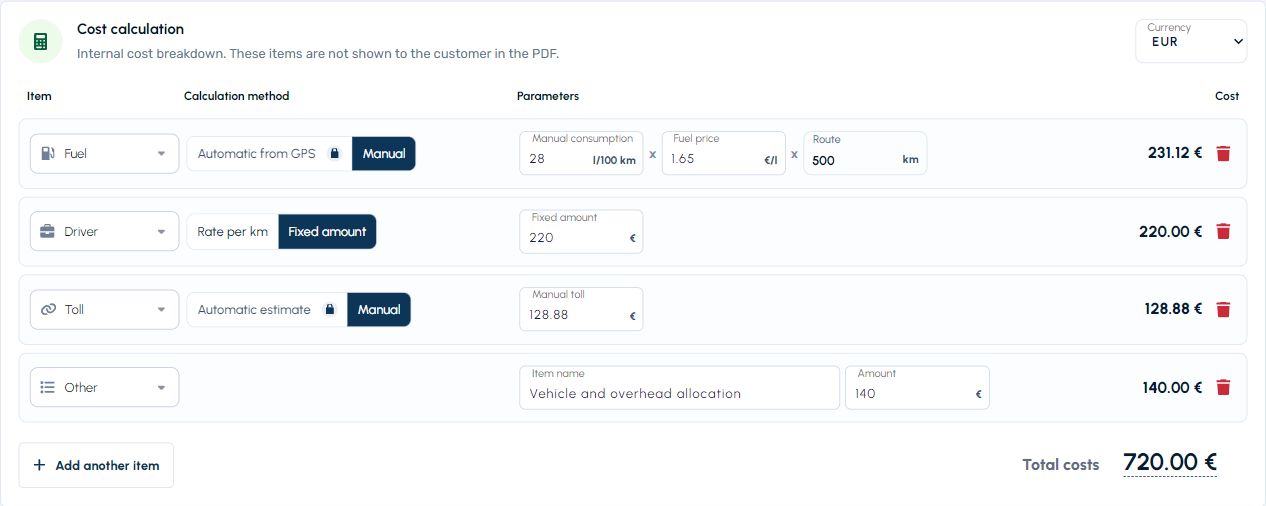
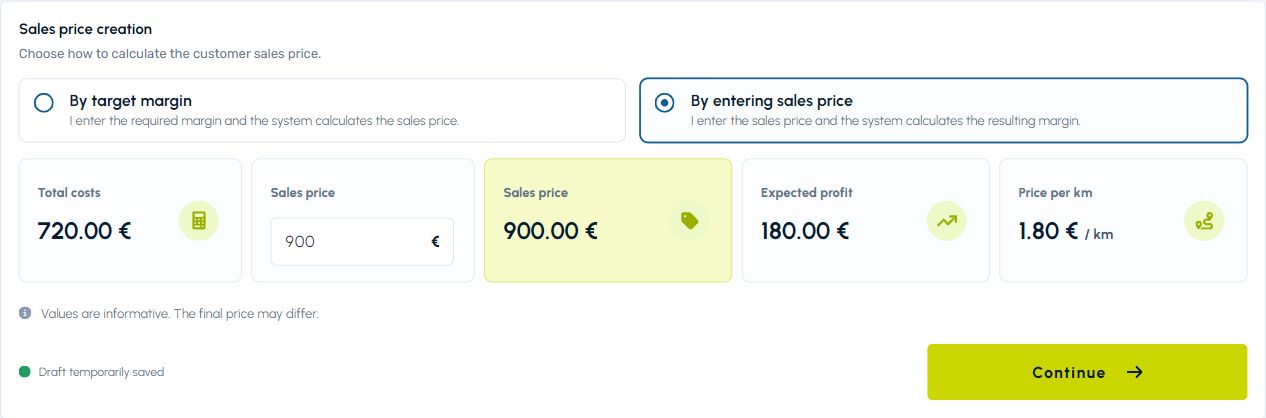
The dispatcher reviews the estimates before using the quote. The public calculator allows manual toll entries; automatic toll estimates require an account.
Once work is confirmed, saved trips help the carrier keep the planned stops, vehicle combination, driver, cargo and timing together. That shared plan gives the dispatcher context for checking whether the cost assumptions still match the journey being operated.
Keep the result and its assumptions together
A trip review should show the expected revenue, estimated full cost, estimated result and the assumptions behind each figure. It should also explain whether the vehicle and driver can complete the plan without disrupting confirmed work.
The result will remain an estimate. Its value comes from making hidden distance, waiting and commitments visible before the truck is committed.