
The collection address is in a PDF. A later email changes the loading time. Another message adds a handling instruction. The freight forwarder can find every detail, but the complete request exists only after someone pieces the messages together.
This becomes risky when several enquiries are open or another forwarder takes over. Which version was checked? Which instruction is still waiting for confirmation? Which carriers received the earlier information?
The customer sends information in parts, but carriers need one clear and current transport brief.
Different versions produce different carrier offers
A carrier can only price the request it receives. If one carrier sees the original PDF and another receives the later email changes, their offers may cover different work. Comparing the prices alone then gives the forwarder a false comparison.
A missed detail may also appear after discussions have started. The proposed vehicle may be unsuitable, the loading plan may change or the carrier may need to revise its price. The forwarder must then explain the same transport again.
This does not always happen because somebody was careless. It often happens because the latest information is spread across private inboxes, attachments and separate notes.
A simple example: eight pallets and one open question
This is a hypothetical example. A customer asks a forwarder to arrange eight pallets of industrial components from Brno to Lyon. The PDF contains the route, dates, total weight and a requirement for a curtainsider. It does not say whether the pallets may be stacked.
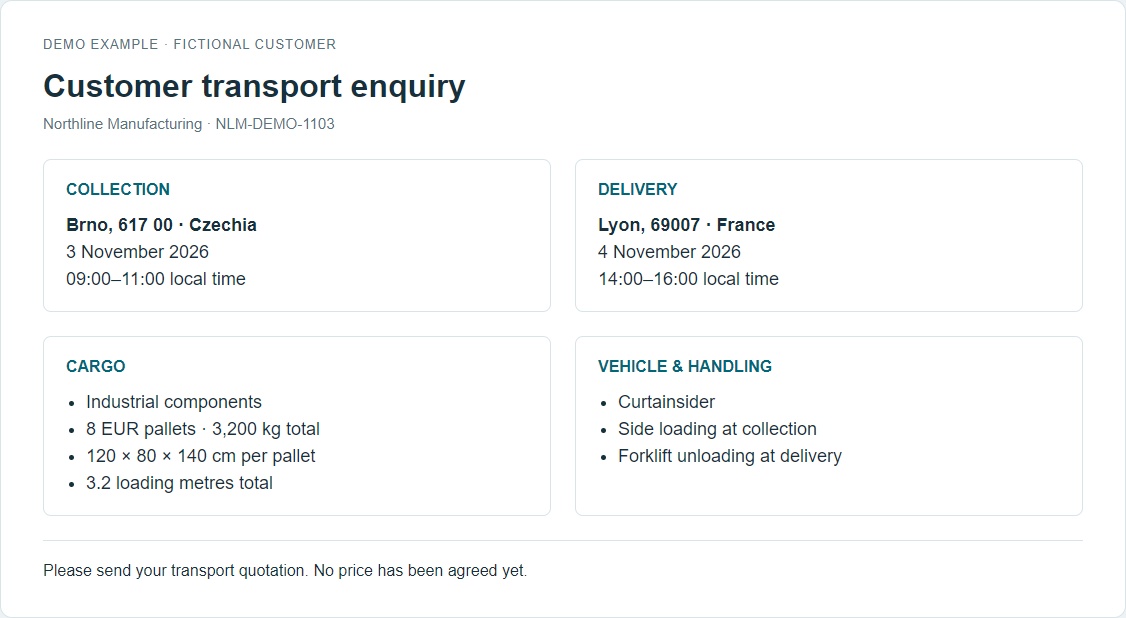
Stacking affects how much floor space the carrier needs. The forwarder therefore asks the customer for confirmation. Until the answer arrives, the working brief should show that stacking is still an open question.
If that question remains only in one person’s inbox, another forwarder may send the incomplete PDF to a carrier. The carrier could then prepare an offer based on an assumption rather than the customer’s confirmed requirement.
Keep one current brief
The team needs one working version of the transport request. It should show the latest confirmed details, any unresolved questions and the next action. The original customer documents and relevant messages should remain available for checking.
Three habits make this easier, whatever system the team uses:
- Mark missing details clearly. Do not let each carrier make a different assumption about stacking, equipment, access or timing.
- Update the working brief when new information arrives. Keep the customer’s original message available so another forwarder can verify the change.
- Contact carriers affected by a change. Updating an internal record does not update a request that has already been sent.
Before handing the enquiry to a colleague, the forwarder should be able to answer four questions: What has the customer confirmed? What is still unclear? Which carriers have already been contacted? Who needs the next update?
Where Moveniq helps
In Moveniq, AI import can prepare a load draft from a supported customer document. That reduces repeated typing when a forwarder receives the route, dates and cargo details in a file. The forwarder checks the result and adds instructions received separately by email.
In the Brno–Lyon example, the draft gives the team a starting point. The forwarder corrects the dates where needed and records that stacking still needs the customer's confirmation.
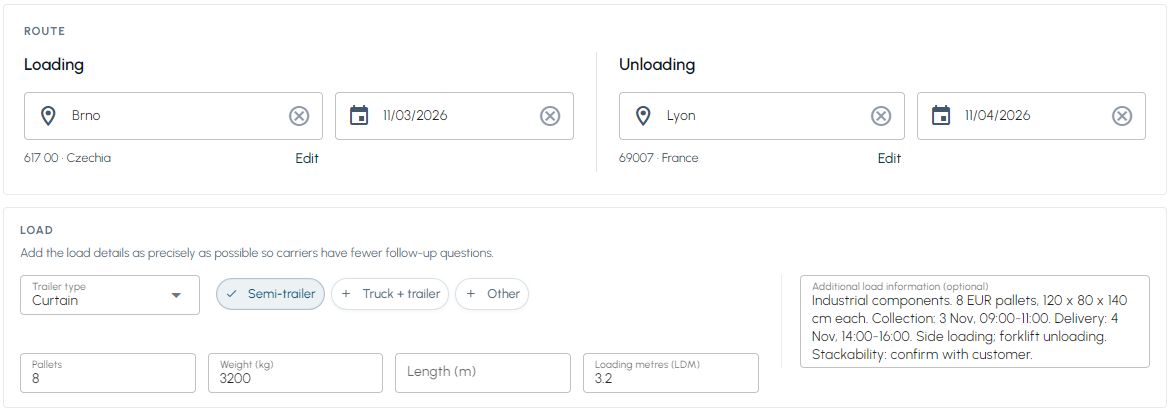
The shared forwarding workspace brings the load, carrier replies, conversations and relevant documents together. A colleague can continue with the same job instead of building another version in a spreadsheet. The practical benefit is less copying and a clearer handover.
Once the requirements are clear, the forwarder can share the reviewed load with selected contacts or groups and through supported freight portals. The available channels depend on the company's connections and Moveniq Bridge where required. The forwarder chooses the carrier and agrees the transport conditions.
When a new instruction arrives later, the team still needs to update the working brief and tell any affected carriers. A shared record makes that work easier to follow; the forwarder remains responsible for passing on the change.
The handover test
A good process passes a simple test: another forwarder can open the enquiry and understand the current request without searching through someone else’s inbox.
For the example, the colleague should see eight pallets from Brno to Lyon, the confirmed route and timing, the curtainsider requirement and a clear note that stacking is still waiting for confirmation. That shared understanding is what prevents different versions from reaching different carriers.