
A dispatcher can spend a surprising amount of the day checking load offers. One vehicle is approaching its delivery point, another needs a return load, and a third has space available on its next journey. Meanwhile, new offers appear and existing ones disappear.
AI dispatch software promises to make this work easier by finding possible loads without someone constantly checking the same offers. But finding an interesting load is only half the job. The real question is whether the vehicle can actually take it.
Where can AI dispatch software save time?
Searching for suitable loads is a good example of repetitive dispatch work. A dispatcher knows where a truck is heading, when it should become available and what type of cargo it can carry. They then look for jobs that might fit.
The search rarely ends after one attempt. An offer that was unavailable in the morning might appear later, while another may already have been taken. Checking repeatedly takes time, especially when several vehicles need work.
Software can help by searching for potential opportunities based on the information available about a trip. Instead of starting the same search from scratch, the dispatcher can focus on reviewing promising results.
Why a promising load might not fit the vehicle plan
Consider a hypothetical example. Eva dispatches trucks for a carrier. One of her vehicles is scheduled to finish unloading at 14:00.
A nearby load looks attractive. Its pickup location is convenient, the cargo appears suitable and the price deserves consideration. There is one problem: the pickup window closes at 13:30.
Even before allowing time to drive between the two locations, the truck cannot meet that pickup window.
Now imagine the software is working with an older plan showing that unloading would finish at 12:00. The offer might appear reasonable against that outdated information, even though Eva knows the actual schedule has changed.
A useful suggestion depends on the information used to produce it. If the unloading time, pickup arrangements or available capacity changes, the dispatcher needs to keep the relevant plan up to date.
What should a dispatcher check before acting on a suggestion?
- Timing: Can the vehicle reach the pickup location within the required window, considering its existing commitments?
- Vehicle suitability: Does the available capacity and equipment match the cargo requirements?
- Route and price: Is the additional distance reasonable, and is the proposed price worth pursuing?
A suitability label or score can help draw attention to an offer, but it should not replace these checks. Nor should a notification be treated as confirmation that the load is suitable or still available.
How to test AI dispatch software using your own fleet
A product demonstration can show how software works. It cannot, by itself, prove how useful that software will be during a normal working day.
A better test uses representative trips from your own operation. Choose a familiar route, a vehicle with known requirements and a realistic unloading schedule.
Try a case where a potential load should fit and another where an important condition makes it impossible. Check whether the available information helps your dispatcher recognise the difference.
Then change a relevant detail in your test record, such as the planned unloading time. Establish whether the software uses the updated information and how that affects the suggestions. Ask the provider which information is considered and which checks still depend on your staff.
Measure the work involved, not simply the number of offers displayed. How much repeated searching was avoided? How long did reviewing the results take? How often did someone need to correct outdated information or investigate an obvious conflict?
Even if no suggested load is accepted during a particular test, the software may still be useful if it reduces repeated checks without creating more work elsewhere.
How Moveniq supports the search for return loads
For carriers managing their own vehicles, Moveniq brings trip planning and the search for return loads into the same working environment.
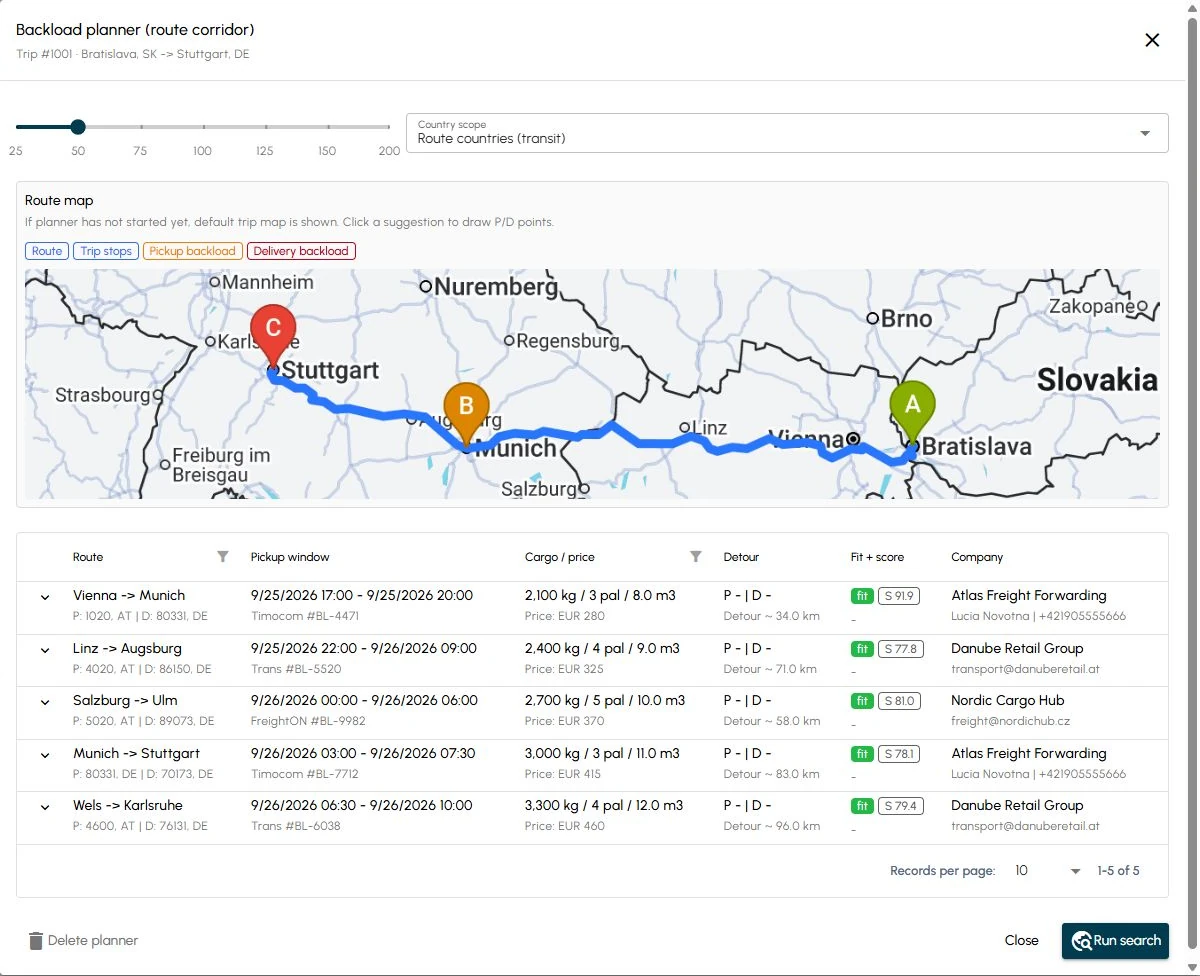
Dispatchers can keep an overview of their planned trips and use the AI backload planner to look for potential loads connected to a saved trip. Recurring searches help reduce the need to check for new opportunities manually, while notifications draw attention to potential matches.
The dispatcher can then review the available offer details against the vehicle's actual schedule, route and requirements before deciding what to do next.
Good dispatch software makes the work lighter, not the decisions less clear
The value of AI dispatch software is not how many recommendations it produces. It is whether those recommendations help someone do their job with less repetitive effort.
When the recorded plan is reliable, suggestions are practical to review and the dispatcher remains in control, AI becomes a useful part of everyday dispatching rather than another system that needs constant attention.